![]()

Can you introduce yourself and your practice?
My name is Eleanor Jablonowska, and I am an interdisciplinary artist currently studying Fine Art at Newcastle University. At the current stage in my practice, I am primarily working with oils to explore paint as a way to materialise memories and dreams, and the blurred overlap between the two. Inspired by abstract expressionists, I use intuitive and vibrant brushstrokes to bridge that gap between a memory and a dream, with a particular focus on interior vs. exterior landscapes. I have been interested in the way we remember our homes and whether dreams interrupt our memories of them.
Describe the original archive images you decided to reinterpret.
I was particularly drawn to technical ink drawings – one of which seemed to be of an Edwardian drawing room, and one of an architectural scene of tall buildings encasing a narrow canal, connected by a decorative bridge.

Why did you choose them?
Considering my interest in interior and exterior spaces, I considered how these images could contribute to the idea of remembering or misremembering a place. Since they were both very technical drawings which carefully considered perspective, I thought it would be interesting to recreate them with a more abstract approach and explore how that changed the interpretation of the images.
How did you set about approaching the project and what was your process?
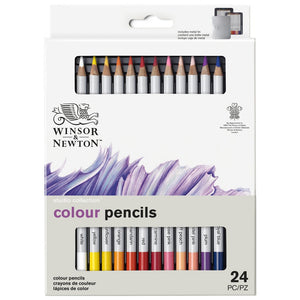
I began by jumping straight into some sketches inspired by the images. Using both coloured pencils and chalk pastels, I selected areas of the images that I was most drawn to and began drawing and abstracting them to discover potential compositions and colour palettes to paint from. Once the sketches had given me inspiration, I started painting, using the sketches I had made of the archival images as my reference point, rather than the images themselves. This allowed me to tap into the idea of memories the images could represent. I then worked on 4 different paintings inspired by each other and the drawings.

Did you encounter any challenges?
Throughout my paintings process there is often a point in the middle where I become stuck, not sure where to take it, but by working on the 4 paintings all at the same time, I was able to consider what was working best in each painting, and bring those elements into the paintings I was struggling with. By doing this, I am much more able to achieve a cohesive collection of paintings while maintaining different and exciting colour palettes and textures.
What were your favourite materials and colours?
Within the oil paints, I was particularly drawn to Azo Yellow Green, Burnt Sienna, Cadmium Red Hue, and Permanent Rose, however I did end up using a whole range of colours. I love to mix them with non-toxic, odourless turpentine as well as fast drying linseed oil to achieve a smooth consistency. I also loved the pigmentation of the chalk pastels, I was able to achieve super vibrant colours within drawings.

Was there anything about the project you found surprising?
I found it interesting to play with the layering of chalk pastels and coloured pencils. It allowed me to create texture and dynamic drawings to work as pieces themselves, and not only simply a starting point for an oil painting.





![W&N WINTON OIL COLOUR [COMPOSITE] 37ML TITANIUM WHITE 094376711653](http://www.winsornewton.com/cdn/shop/files/9238_5073745e-fcfe-4fad-aab4-d631b84e4491.jpg?crop=center&v=1721326117&width=20)
![W&N WINTON OIL COLOUR [SPLODGE] TITANIUM WHITE](http://www.winsornewton.com/cdn/shop/files/131754_19b392ee-9bf6-4caf-a2eb-0356ec1c660a.jpg?crop=center&v=1721326118&width=20)
![WN PWC KAREN KLUGLEIN BOTANICAL SET [OPEN 3]](http://www.winsornewton.com/cdn/shop/files/136448.jpg?crop=center&v=1761625362&width=20)
![WN PWC KAREN KLUGLEIN BOTANICAL SET [FRONT]](http://www.winsornewton.com/cdn/shop/files/136444.jpg?crop=center&v=1761625362&width=20)
![WN PWC ESSENTIAL SET [CONTENTS 2]](http://www.winsornewton.com/cdn/shop/files/137579.jpg?crop=center&v=1761625558&width=20)
![WN PWC ESSENTIAL SET [FRONT]](http://www.winsornewton.com/cdn/shop/files/137583.jpg?crop=center&v=1761625558&width=20)
![W&N GALERIA CARDBOARD SET 10X12ML 884955097809 [OPEN]](http://www.winsornewton.com/cdn/shop/files/138856.jpg?crop=center&v=1761626083&width=20)
![W&N GALERIA CARDBOARD SET 10X12ML [B014096] 884955097809 [FOP]](http://www.winsornewton.com/cdn/shop/files/138855.jpg?crop=center&v=1761626083&width=20)
![W&N PROMARKER 24PC STUDENT DESIGNER 884955043295 [OPEN]](http://www.winsornewton.com/cdn/shop/files/78675_d6356b09-bd48-4280-8df1-eefc85a4de3b.jpg?crop=center&v=1761841229&width=20)
![W&N PROMARKER 24PC STUDENT DESIGNER 884955043295 [FRONT]](http://www.winsornewton.com/cdn/shop/files/78674_d4d78a69-7150-4bf4-a504-3cb5304b0f80.jpg?crop=center&v=1721326116&width=20)

![W&N PROFESSIONAL WATER COLOUR TYRIAN PURPLE [SWATCH]](http://www.winsornewton.com/cdn/shop/files/136113.jpg?crop=center&v=1724423390&width=20)
